Update:

Panting Pooches consistently serves 10+ countries on 6 continents every week! Welcome to every one across the planet!

Monday, August 22, 2016

Review: PFAT Food Storage Bag


This review has been a long time coming!  Outward Hound makes some great affordable pet gear and about 2.5 years ago we were preparing to take 2/3 of our canine crew across country on a road trip.


We were still feeding kibble at that time and I didn't want to take up valuable space in the car by bringing a whole air tight food container which would be mostly empty by the time we drove back home.  (This was close to 2 weeks away from home and we took Pepe & Zoey back to IL and IA while we visited family and attended a wedding)


I stumbled across Outward Hound's PFAT (Pest Free Air Tight) bag and thought what a perfect solution.  I wanted something that could keep the kibble safe during our travels, easy to carry as we bounced around, didn't require using and throwing away food storage bags, and best of all - the size of the bag diminishes each day kibble was eaten allowing for valuable SUV room since we were bringing a lot of stuff back home with us.


The PFAT bag may not be optimal for everyday kibble use, but it's great for storage and traveling.  Our pups eat homemade raw 6 days a week and the 7th day is usually Honest Kitchen prep or kibble.  I want them to be able to handle kibble for when we go on vacation and someone else watches them, or in the case of another fire evacuation and needing something super easy and convenient. 


One of the best things about this bag is how it's designed. When you're ready to close it up, you can squeeze as much air out, then roll the sturdy top seams down and buckle the ends together.  This helps to keep the food fresh and essentially making the bag into a purse, you could throw on your shoulder or carry by the handle.  Again, super great for traveling, camping, any K9 adventure that awaits!


The PFAT bags come in 3 sizes and we purchased the medium which holds 20 lbs pounds of kibble- more than what we needed in the 2 week time we were on the road.  For now, I have the PFAT bag inside a reused kitty litter tub for extra protection since we only need to feed kibble 1 day a week at most. The bin is kept out of the way in the laundry room and pulled out as needed.

All in all, a great purchase and this bag could be used for so many other purposes besides kibble. Chicken feed, bird seed, or even long term food storage for you zombie apocalypse preppers!


Monday, June 6, 2016

Do Better

I want to start off with this note written by a snake keeper in Tucson, the message applies to anyone who has any kind of animal...


This is a message we all need to take to heart and come back to on a regular basis.  Having worked with animals professionally for the past 10 years, I've met a lot of boneheads who let their ego get in the way of bettering their animals health.  Guess what, I was one of those boneheads for a while! I thought my medium quality kibble was just perfect for Pepe and saw no reason to change my ways.  I'm glad I got over myself and decided to start learning about pet health in new avenues, for the sake of my animals.

 Most of you know I have been making my own dogfood for almost 2 years now.  When I saw 'make' I mean I buy all of my ingredients and formulate each dog's food based on their weight and individual needs.  Each dog has a laminated chart kept in the kitchen so I have a quick reference of who needs what in their food.  BUT this post isn't about their homemade food because I want to ease into this. (Their homemade food consists of them eating raw meat, raw bones, organs, chicken necks... because that's what a canid is supposed to eat!)  Instead, this is about our one day a week where they don't eat homemade raw.  The picture below isn't staged, I decided to snap a pic while making their breakfast this morning.  The clear bag of greeny stuff is Honest Kitchen's Preference Base.  This is not a complete meal but rather needs protein mixed in to be a complete meal.  Off to the left is a contained of dehydrated duck eggs.  These are eggs from our ducks, scrambled, then dehydrated.  Eggs are a perfect protein source and I even feed them raw about 3x a week. To the right of the eggs is a small container of dehydrated venison.  I belong to a raw co-op for southern Arizona, where we use buying power to order large amounts, like sometimes close to 4,000lbs of meat, and then get better prices for everyone.  My venison/elk blend is only $2/lb!! So I dehydrate a few pounds to use as another protein mix-in with this food.  

Now since everything is dehydrated, it needs to be reconstituted with water.  Water is after all, extremely important and yet kibble is cooked and cooked and cooked until it is essentially devoid of nutrients including water.  BUT I don't use regular ol' water in this mix.  I have started making my own kefir water the past few months. Say whhhhhat?  Most of us know about that yummy smooth milk kefir sold in stores but kefir can also be made in water, which saves a LOT of calories and great for anyone with dairy intolerances. Cow's milk isn't good for dogs or cats anyways, goat milk is much easier for them to digest.  Where can you make your own water kefir? You can start with some cultures from Cultures for Health.  This is what I got and I love it! They also have cultures for milk kefir too! The cultures to make your own kefir can be re-used over and over so I tend to have excess since I always have a batch of kefir fermenting on the counter. I like to call my jug of kefir my 'moonshine jug' and blow across the top of it trying to jug out some tunes :) Sidebar: I bought it for about $6 at the local home brewery shop!

So all mixed up, the food looks pretty great doesn't it? Doesn't that look a lot healthier than kibble? It smells pretty amazing too!


My point in all this is that along with everything else in the world, veterinary medicine and nutrition continues to change for the better.  We need to set aside our own mindsets of 'Well Fido has eaten the same bag of kibble for 5 years and he's fine."  Well I'm sure I could survive solely on McDonald's too but that doesn't mean that I should or that it's good for me.

I will eventually make a post showing what my dog's do eat 6 days a week.  The freezer space needed in order to stock up when prices are good, the process of weighing out each dog's food along with their food charts, and nutrition books by veterinarians that can lead you into better understanding of how you're feeding your animals.


Wednesday, April 13, 2016

To Shave or Not to Shave?

It's that time of year in southern Arizona where we start getting reminded that we live in a pretty toasty state! In just a month or so it will start becoming uncomfortable outside, I will have pushed my dog walks earlier in the mornings, and even carrying water to give pooches a water break while we walk.

Because we live in a hotter climate, many people believe that shaving dogs and cats will help keep them cooler.  The problem is, the sun is so intense here that our UV index recommends staying out of direct sunlight the majority of spring and summer!  Below is a short but great video by Karen Becker, DVM that discusses shaving cats and dogs.

Our 3 dogs are shorter haired coats i.e. our 2 terriers have a typical single-layer coat and our beagle mix has a double coat, albeit naturally on the short side.  I prefer to have shorter hair dogs since I can maintain their grooming needs myself and can save money by not needing to go to the groomer.  Although, one of my cats, Naveen, is possibly a maine-coon mix and has a beautiful long coat on him, which requires a lot of grooming.  His mother, Nova, grooms him more than he does!  Because of the added duty of grooming herself and her son, she throws a lot of hairballs.  So much that I have occasionally considered giving Naveen a lion cut for the summers.  With his long coat he would look adorable with a distinguished mane and little fluffy feet!  But I have to remind myself that looks alone are not a reason to shave him.  It would be selfish of me. To help Nova with hairballs, I give her a fish oil supplement which keeps her system 'lubed up'.

click picture to enlarge

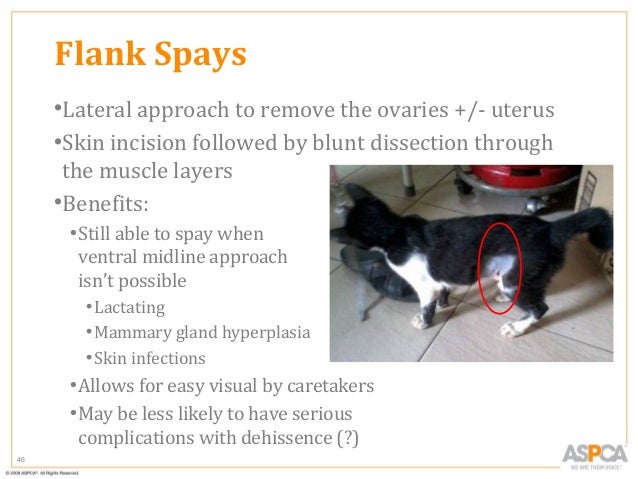
One topic that most groomers and pet owners are unaware of is a condition called Alopecia X.  This is a hair cycle abnormality often belonging to nordic breeds and toy/mini poodles.  Shaving doesn't cause this condition, but for a dog who may be prone to Alopecia X, shaving can mean any hair re-growth can be delayed.  This is called post-clipping alopecia and I've seen it a few times!  First, in a husky I worked with in Illinois, who had surgery on his leg.  It took over a year for the hair to come back in!  Second, on my own dog Zoey!  When Zoey was found wandering the streets of Tucson and her family didn't want her back, she became a ward of my animal hospital for a few weeks before I decided to adopt her.  Our Dr spayed Zoey in a non-traditional way, he chose to 'flank-spay' her like some vet's spay cats.  For a visual of where the incision on Zoey was, click here (don't worry, it's not graphic.) Zoey had a small shaved area on her side which took several months for the hair to regrow.

Some other medical conditions can cause hair to not regrow normally after being shaved.  Pet's with hormone disorders like thyroid issues and cushing's disease are likely to have difficulty regrowing hair normally as well.  It could take over a year for your pet to grow their hair back in, and it will often be shorter or coarser than it should be.


Click picture to enlarge

Ultimately most professionals agree it is best not to shave a double-coated dog unless it is medically necessary in which case your veterinarian would be the one recommending it, not a groomer.  If you do choose to shave your dog, your groomer should be honest with you about the potential issues of sunburn and the chance that hair may never re-grow normally.  Some groomers even make you sign a waiver, protecting them from whatever may happen to your pet after being shaved. That should certainly make you think twice!  The best thing to do is to keep your pet's groomed properly so their fur is free of tangles and mats.  Their fur is the safest way to protect them from all of the elements, hot or cold.


Thursday, April 7, 2016

Poochy Paw Protection


With springtime temperatures slowly increasing towards our scorching summers, now is a great time to start thinking about keeping your dog's paws safe. Dry and cracked paws can be extra painful when on the hiking trails or the warm pavement. Think about how painful your hands can feel in the wintertime when there is no moisture in the air and handwashing (due to germ season) leads to excessively dry and cracked skin.  All you want is to slather on some thick lotion to get some relief.  The same can happen to your dog's pads.


We all know not to walk dogs on black asphalt mid-day during the hot summer months. Concrete sidewalks luckily don't retain nearly as much heat as black asphalt but they can still become painful to walk on during the day.  Your dog still needs to stretch their legs during the summer so morning walks or evening walks are best, but it is still important to take care of your dog's feet regardless. Here are a few simple options!


Musher's Secret is my favorite paw balm so far.  Originally made to protect paws from winter elements like ice and sidewalk salt, people realized it works just as well in the desert! From Musher's Secret website..

Q: "Is Musher's Secret just for the winter? "
A: "Definitely not.  Mushers protects from hot pavement and sand as well as any irritants your pet may walk through. We have many customers in Arizona and California."


Another great option is doggie boots.  Years ago I bought Pepe a pair of Ruffwear boots to protect his little feet from the snow and ice when we lived back home in Illinois.  We still have his little boots packed away but haven't been touched in years.  I felt like this particular pair didn't fit him as well as I'd like and he would occasionally kick them off.  Luckily there are several types of boots on the market to fit your dog best.  If I was to try another type of boots, these Hiware dog boots would be at the top of my list.  They are longer and have 2 velcro straps for a better fit.  These neoprene dog boots also look like they would be a great fit too!


If you do try dog boots, slowly introduce your dog to them.  Most people put just one boot on, not all 4 at once.   It's pretty comical to watch but you can distract them from their new footware, with a favorite activity like a walk around the block or a game of fetch.  Boots, just like a new pair of shoes for us, need to be broken in so start off with short walks and increase your adventures appropriately.

One option I wouldn't recommend for wearing on pavement are Paws waterproof boots.  I've had experience with these in my animal hospitals and they are very similar to a latex balloon with the end cut off.  They are great for senior pets that might slip on wood or tile floors but I've had someone tell me they almost shrink wrapped her dog's feet when walking outside in the hot Tucson heat.  Again, I think these are a great indoor non-slip option, but not great for wearing outdoors when the temperatures are up.


It is always a good idea to do a general 'nose to toes' look over of your pets on a regular basis, they usually think they're getting a body massage! Looking between toes, under lip flaps, inside ears etc can help detect potential problems before they become serious.

Wednesday, March 30, 2016

Whisker Fatigue

My big handsome boy Naveen.  You can see why I call him my little lion boy.

Let's talk about those cute proprioceptors on your cat's face, otherwise known as whiskers if you aren't a major science nerd like I am.  Whiskers are constantly underestimated by us (relatively) bald humans. These hypersensitive sensory organs are rooted deeper than other hairs and are anchored by rich nerve endings.  Your cat's whiskers serve many functions, all to help relay what is going on in the environment around them especially when it may be too dark to see normally.  

Whiskers pick up air currents and vibrations as well as provide spacial reasoning.  Spacial reasoning, what's that? A cat's whiskerspan runs from tip of whisker to tip of whisker and is generally as wide as he is.  This allows a cat to know if he can easily fit through an opening or not.  Whiskers also allow cats, who are naturally far-sighted, to 'see' up close when they are walking about in the dark.  It's often the reason your cat might walk along the wall in a hallway, rather than walking right down the middle.

Now, because these whiskers are sooo sensitive, they are easily over-stimulated.  I like to think of them as introverts like me!  Because I am an introvert, I get easily over-stimulated and exhausted by a lot of commotion, noise, etc.  Similarily a cat's whiskers are so physically sensitive and are constantly relaying information to your cat's brain that certain movements can be downright irritating to them.  Unfortunately even eating their food can be physically fatiguing to their systems.


In deep food bowls, a cat has to push their face down in order to reach their kibble, causing their whiskers to constantly rub against the sides of the bowl.  This can cause a lot of sensory irritation, turning meal time into a chore.


Signs of whisker fatigue can include:
  • leaving food in the bowl but still acting hungry
  • acting hesitant to eat
  • pacing around their food bowl
  • pulling food out of the bowl to eat on the ground
  • standing by the food bowl prior to eating, trying to decide to eat

What can you do?  Try out a new feeding dish! I'm a fan of ceramic or stainless steel bowls for animals since they are easy to clean and do not hold onto bacteria the way plastic dishes do.  A great food dish option is Dr. Catsby's Food Bowl for Whisker Relief. Shallow dishes also apply to canned food, not just kibble!

Whisker fatigue can also stem from a crowded water bowl.  Great options for relief would be the Catit Fountain, and the Drinkwell 360 Fountain.


Soon after replacing your cat's dishes with whisker friendly options, you may notice their pickiness subside.  If not, they may have something else going on that you would want to discuss with your vet.

Kitty, showing off her pretty whiskers